Loading...
Serving Huntsville, TX and surrounding areas. (936) 994-1220
Walker County soil shifts. Rainfall is high. Feral hogs are real. We install farm and ranch fencing in Huntsville that accounts for all of it - before a single post goes in the ground.
Farm and ranch fencing in Huntsville, TX covers perimeter fencing, cross-fencing to divide pastures, and boundary work, and most projects on a 10-to-20-acre property take a crew two to five days from first post to final walkthrough. The right fence type depends on what animals you are managing, your terrain, and whether wildlife pressure is a factor on your land.
In Walker County, the combination of clay-heavy soil, high annual rainfall, and active feral hog populations means farm fencing needs more thought than just running a line of wire between posts. We walk your property before recommending anything. A phone quote without a site visit is a sign the contractor does not understand what they are getting into.
If you also need a separate enclosure for dogs or smaller animals, our pet and dog fencing service handles those installations with the same attention to post-setting and gate hardware.
If you walk your fence line after a rainy stretch and notice posts tilting - especially at corners - the foundation is failing. In Walker County's clay soils, posts that were not set deep enough shift with every wet-dry cycle. A leaning post does not fix itself; the longer you wait, the more wire sags and the more posts are affected.
When cattle, horses, or goats start pushing against sections of fence or finding gaps, the fence is already compromised. Escaped livestock on rural roads is a genuine safety hazard, and Texas law places responsibility on landowners to keep animals contained. A fence being tested by animals is one storm away from a full breach.
Feral hogs root under fences, push posts sideways, and create gaps large enough for other animals to follow through. If you are finding disturbed soil, bent wire, or displaced posts in a pattern running along the fence, hogs are likely the cause. This kind of damage tends to spread quickly if it is not addressed with the right fix.
Fence wire that has gone slack, snapped, or rusted to the point of crumbling is no longer doing its job. In Huntsville's humid climate, older untreated wire deteriorates faster than in drier parts of Texas. Sagging wire usually means posts or bracing need attention too, not just the wire itself.
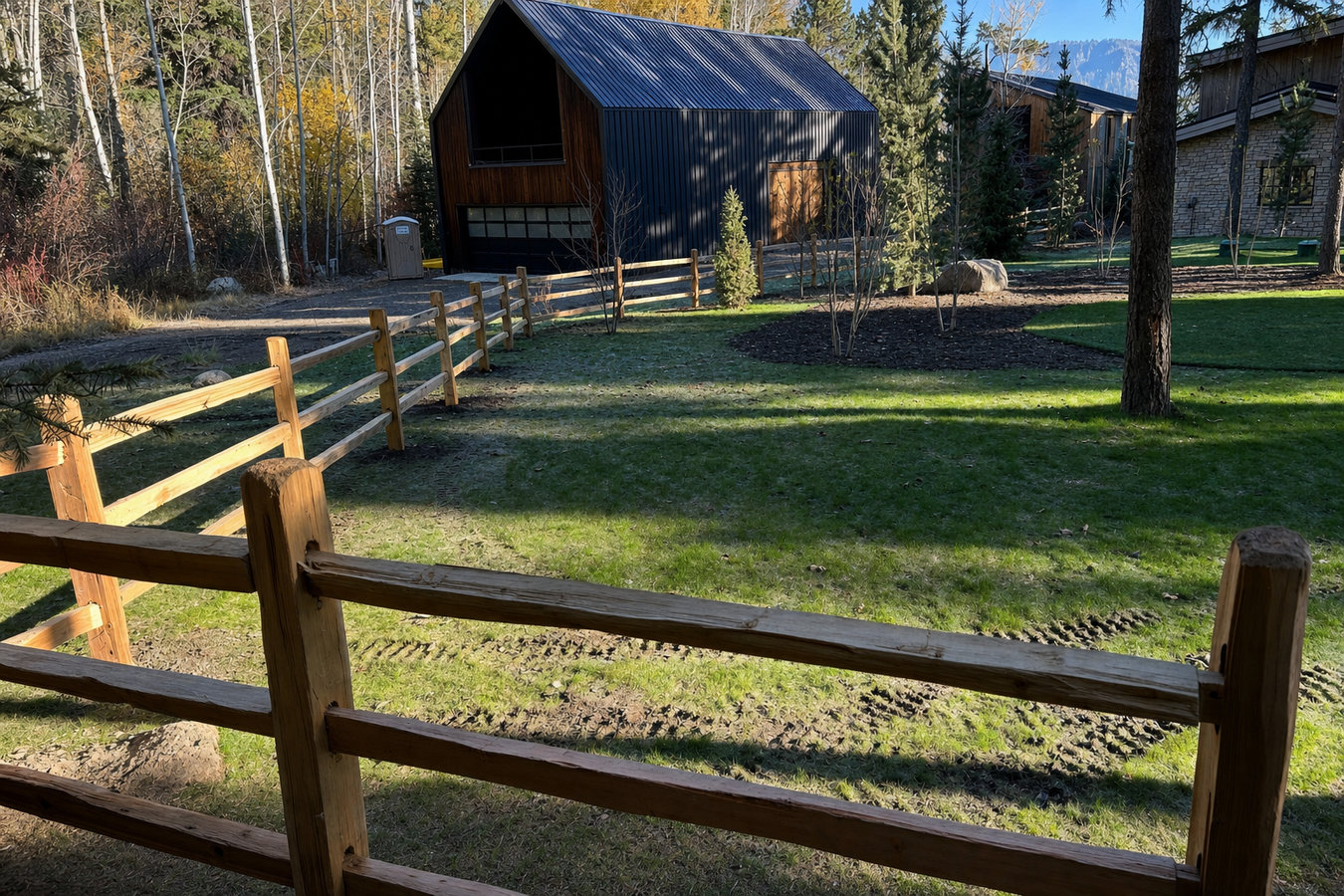
We install barbed wire, woven wire, high-tensile, and wood-post combinations depending on your animals and terrain. For cattle, barbed wire remains the most cost-effective and widely used option in Walker County. For horses, goats, and sheep, woven wire with smaller openings prevents escapes and reduces the chance of entanglement. We match the fence type to the animals before we order a single roll of wire. If your property also includes structures that would benefit from more decorative fencing near the entrance, our wood fence installation service covers that work separately.
Cross-fencing for rotational grazing is one of the most common requests we handle in this area. Well-planned internal fencing lets you move animals between sections and give pastures time to recover - which is better for your land over time. We also build corner and brace assemblies that are built to last in clay-heavy soil, using concrete around all anchor points to prevent seasonal shifting. Texas A&M AgriLife Extension publishes detailed fencing guidance for Texas landowners if you want to read up before your estimate.
The standard for cattle operations in Walker County - affordable, proven, and effective when installed with properly set corner assemblies.
Best for properties with horses, goats, sheep, or any smaller animal that can slip through barbed wire or get tangled in it.
A lower-maintenance option for large perimeters where the fence needs to stay taut over long spans without constant adjustment.
Internal fence systems designed to divide pastures and support a grazing rotation that keeps your land productive long-term.
Walker County sits in the East Texas Pineywoods region, where soils are a mix of sandy loam and clay. That clay content means the ground moves - swelling in the wet season and pulling back in dry spells. Posts not set to the right depth will shift within a few years of installation. Beyond the soil, properties near the edges of Huntsville that border Sam Houston National Forest deal with significant wildlife pressure. Feral hogs are active in this area and can destroy a fence line by rooting under the bottom wire. Any farm fence we design on properties with known hog activity accounts for that pressure from the start.
Landowners in Madisonville and Crockett face the same combination of clay soil, high rainfall, and livestock management needs that we see in Huntsville. We serve both communities and apply the same site-first approach - walking the property before recommending any fence type or configuration.
We ask about acreage, animals, existing fence, and whether wildlife pressure is a factor. We reply to all requests within one business day. This call gives us enough to determine whether a site visit makes sense and what it will involve.
A contractor comes out to walk the fence line with you, check the terrain, and assess any existing posts or wire. Any quote we give you comes after seeing the land - not before. This is your chance to ask questions and get a feel for whether we know what we are talking about.
In the Huntsville area, brush clearing is often needed before posts can be set. We tell you upfront whether clearing is in the quote or billed separately. Surprise charges for clearing are one of the most common complaints we hear from landowners who worked with other contractors.
Corner and brace posts go in first with concrete anchoring, then line posts at consistent depth, then wire and gates. Before we leave, we walk the full fence line with you - checking for gaps at ground level, gate function, and wire tension. You sign off when you are satisfied.
We walk the property before giving you a price. No surprises on clearing costs. Free on-site estimates.
(936) 994-1220Line posts go in at least 24 to 30 inches deep here, with corner and brace posts going deeper and anchored in concrete. That is what this soil actually requires to stay stable through wet-dry cycles. A contractor who does not tell you their post depth is one to ask about.
Properties near Sam Houston National Forest and rural Walker County roads deal with active hog pressure. When that is a factor on your land, we adjust the design - tighter post spacing, bottom wire positioned to close off ground gaps, and materials selected to take a beating without failing early.
Brush clearing along fence lines is common in the Pineywoods. We tell you upfront in writing whether it is in the quote or billed separately. This is one of the most common sources of frustration with fence contractors in this area, and we eliminate it before work begins.
Property line disputes are easier to prevent than to resolve. We confirm boundary lines with you before the first post goes in. If there is any question about where your line falls, you know about it before money is spent, not after. Walker County has a history of shared-fence disputes between neighbors.
When you work with a contractor who knows Walker County land - the soil, the rainfall, the livestock needs, and the wildlife pressure - you get a fence that does its job from the first season. That is what we bring to every farm and ranch job in this area. Call 811 before any digging to have underground lines marked - we handle this on every job as a standard part of preparation.
Dedicated enclosures for dogs and smaller animals, built with the same post-depth standards as our agricultural work.
Learn MoreDecorative and privacy wood fencing for residential areas of rural properties, driveways, and home perimeters.
Learn MoreCall for a free on-site estimate. We walk the land, explain every cost upfront, and build a fence that holds up through Walker County seasons.